Strengthening Training in Plant Phenotyping
The PhD Program in Plant Sciences at the Plant Science Center is strengthening its research curriculum by expanding its training offer in plant phenotyping. This development reflects the growing importance of phenotyping across plant science—from understanding fundamental biological processes to addressing challenges in agriculture and climate resilience.
As part of this effort, PSC has expanded its course portfolio in close collaboration with experts and lecturers from ETH Zurich, the University of Zurich, and the University of Basel. These courses equip early-career researchers with both conceptual understanding and practical skills:
- Crop Phenotyping
- PReSens: Proximal and Remote Sensing for Soil and Vegetation
- Basic Plant Disease Diagnostics
- Introduction to Plant Image Analysis
- Applied Crop Modelling for Climate Risk Assessment
- Advanced Course on 3D Microscopy Imaging of Plant Tissues and Image Processing
Together, these courses cover a wide methodological spectrum, from controlled environment experiments and microscopy-based approaches to field phenotyping, remote sensing, and data-driven modelling.
In parallel, PSC has recently joined the Swiss Plant Phenotyping Network (SPPN), further reinforcing its commitment to supporting training, networking, and scientific exchange within the plant science community. While PSC does not conduct research itself, it plays a key role in coordinating educational activities, facilitating interdisciplinary exchange, and connecting researchers across institutions.
Crop Phenotyping (ETH VVZ 751-4106-00L)
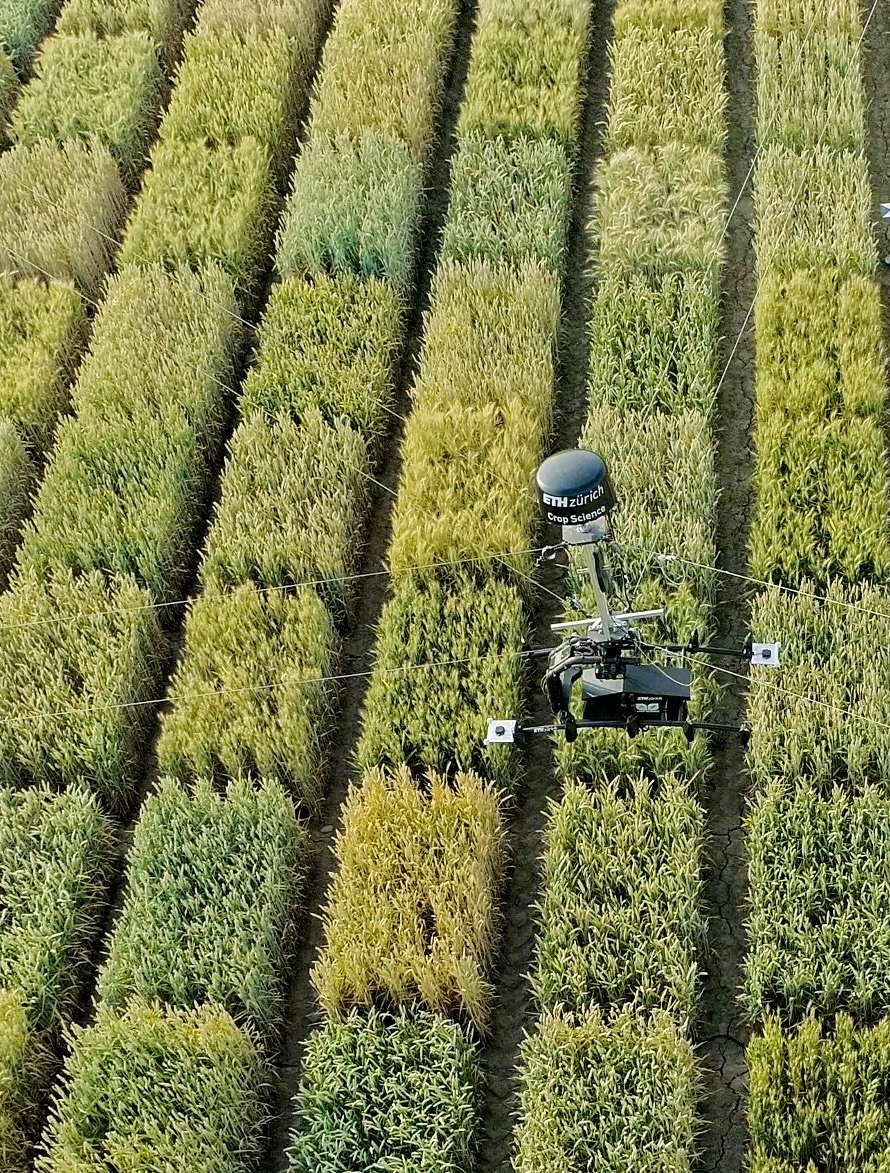
Crop phenotyping aims to quantify traits like photosynthesis, development, architecture, biomass or quality of crops using a broad variety of sensors and analysis procedures. The course aims to provide the necessary basic knowledge in agronomy and plant breeding along with knowledge in image acquisition, computer vision, machine learning and crop modelling to improve crops and cropping systems. Breeders need to understand the interaction among plants of different varieties or species to make the right selection decisions. The crop phenotyping community offers tools to improve the selection process by helping to understand how crops achieve high yield and how yield components are affected by stresses. Their phenotyping toolbox consists of: i) sensor carriers (drones, ground-based robots, gantries and hand-held devices), ii) all kinds of active and passive sensors, and iii) an extensive model and data analysis framework. This framework is increasingly deploying 3D information from crop canopies combined with crop models and AI-driven image and data analysis workflows.
Due to this complexity the community is divided into different sub disciplines with research specialists such as i) physiological breeders, who bring in a mechanistic understanding how crops function; ii) automation and sensor developers, who bring in new, plant-specific sensing solutions; iii) modellers, who make sure that sensor-derived data is summarized to predict the target traits (mostly yield and quality parameters); iv) data management specialists making sure that data is FAIR and that thousands of small experiments carried out across the globe can be harnessed into big data to understand the interaction between genotypes, the production environment and management practices (GxExM). All these specialists need to be able to collaboratively contribute to the overall data acquisition and data processing workflow. In Crop Phenotyping, we teach the main aspects of this workflow and form teams that collaboratively work on a common project.
The course will take place on the field phenotyping platform FIP (kp.ethz.ch/FIP) of the ETH research station in Eschikon, which is part of the International Plant Phenotyping Network, European Research Infrastructure for Plant Phenotyping and the DigiCrop network.
We planted a “variety garden” with the most important crops of Switzerland and an experiment including all varieties listed on the wheat variety list of Switzerland to work on. Both experiments will be used also for teaching and intense observations with the aim to explain how the different crops go through the season. This will include in-field observation of the response towards stresses and diseases.
We will look at different types of sensors ranging from active sensing of chlorophyll fluorescence as proxy for photosynthesis over thermography to high-resolution RGB imaging including reconstruction of point clouds from multi-view images.
Modelling steps will include the acquisition of image training data by labelling, the extraction of features using deep neural networks, spatial correction of field heterogeneity and dynamic modelling of growth and stress response.
In a common project, we will split up into four groups mimicking the specializations of different crop phenotyping experts like working out the basics in crop physiology, utilizing imaging sensors in the field, extracting targeted features from the image and processing the data to compare it with ground truth. The results of this collaborative research will be presented at the final field day after the end of the semester. At this day we will be in the field with experts to learn additional phenotyping aspects and the quantification of diseases.
Individual Performance and Assessment: PhD students will take part in the MSc course 751-4106-00 G Crop Phenotyping. A reduced workload will allow to acquire 2 ECTS points: Participants enrolled in the PSC are required to i) give a presentation, ii) participate in the group work carried out during the season, and iii) submit one of 5 exercises.
2 ECTS (60 learning hours)
Annually (Spring semester)
Lecturers: PD Dr. Andreas Hund, Dr. Beat Keller, PD Dr. Jörg Leipner, Dr. Afef Marzougui & Prof. Dr. Achim Walter (ETHZ)
Location: ETH Zurich
PReSens: Proximal and Remote Sensing For Soil and Vegetation (ETH VVZ: 701-1634-00L)
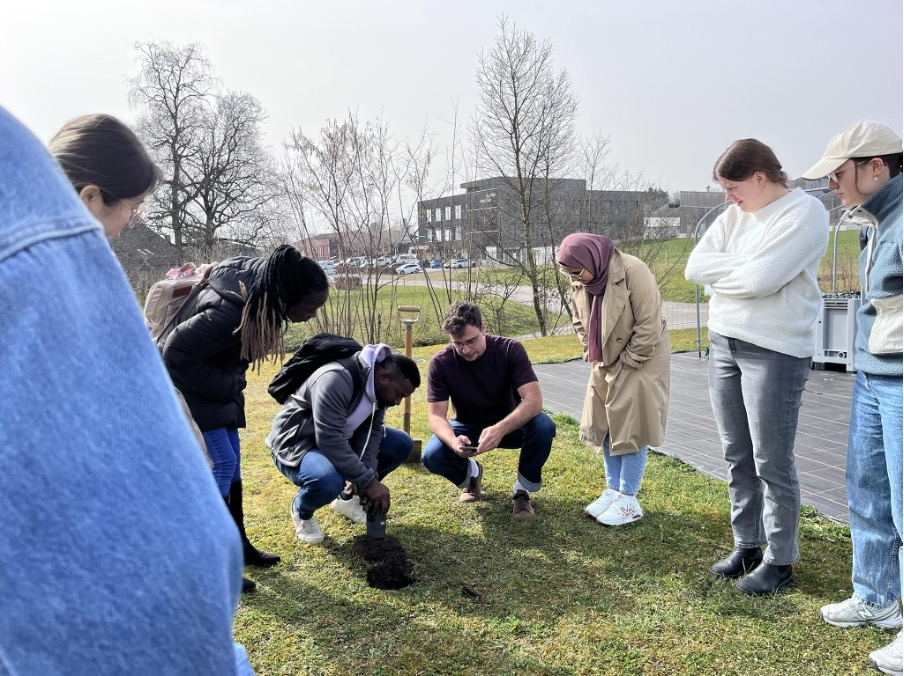
The course introduces imaging and spectroscopy techniques spanning spectral and spatial scales: from UV–visible and near-infrared to X-ray methods, and from microns to entire landscapes. Using ground, drone, and satellite platforms, students gain hands-on experience acquiring, processing, and interpreting data on soil and vegetation in environmental and agricultural systems.
In the first half of the semester, students are introduced to a series spectroscopy and imaging processing techniques. Each weekly module consists of a two-hour theoretical lecture establishing the scientific foundations of the method, followed by self-guided exercises (with dedicated support hours) focusing on data processing and analysis using real datasets drawn from the lecturers’ research.
Students progress from analysing individual spectra, to applying classical and advanced image processing techniques, through the following modules:
- The Leaf Spectrum;
- The Soil Spectrum;
- Imaging Spectroscopy: Classification and Temporal Change Analysis;
- Seeing Soil from the Sky: Remote sensing of soil properties;
- Deep Learning for Tree Species Identification;
- X-ray tomography: Image Segmentation of Soil Microstructure;
- Drone-based Imaging: from Canopy to Landscape Structure
In the second half of the semester, students work in groups on a project focused on one technique of their choice. They design and implement a sampling strategy, collect and acquire their own data in the field, and apply the analytical approaches learned earlier in the course. Building on these skills, they process, interpret, and critically discuss their results to address a specific research question.
The course is held at the ETH Eschikon-Lindau Campus, offering an immersive learning experience that combines classroom learning with hands-on field projects. The unique setting enables students to develop practical skills and apply the methods learned directly in both forest and agricultural systems.
Individual Performance and Assessment: PhD students will take part in the MSc course 701-1634-00L PReSens: Proximal and Remote Sensing for Soil and Vegetation. A reduced workload will allow to acquire 2 instead of the 5 ECTS points: Participants enrolled in the PSC are required to i) participate in the lectures, and ii) submit 4 of 8 exercises.
Participation in the group work conducted during the second half of the semester must be agreed with the lecturer on an individual basis at the beginning of the semester and may allow PhD students to acquire an additional 1 ECTS credit.
Prior Knowledge: There are no formal prerequisites. Students are expected to have a basic understanding of soil science, plant physiology, and data science, as well as a strong interest in developing practical skills for soil and vegetation monitoring. Prior experience with GIS, or completion of 701-0951-00L “GIS – Introduction into Geoinformation Science” (or an equivalent course), is an advantage.
2 ECTS
Annually (Spring semester)
Lecturers: Dr. Fanny Petibon, Dr. Mirela Beloiu Schwenke, Dr. Patrick Duddek
Location: ETH Zurich
Basic Plant Disease Diagnostics
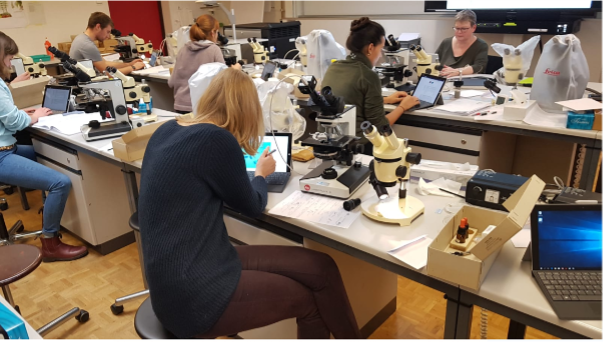
Identification of plant diseases based on host, symptoms and pathogen micromorphology. The diagnostics part is completed with life cycles and related control measures for the most important fungal diseases of selected annual and perennial crops and their causal pathogens.
Course Program: The students will learn and train preparation skills for microscopy, acquire basic knowledge of selected diseases (identification, biology of pathogen, epidemiology) and understand the corresponding integrated control measures practiced in Swiss agriculture.
Prior Knowledge: None
Individual Performance and Assessment: Active participation in the exercises is required. In a final test individual skills of microscopical preparation and recognition of structures important for diagnosis are assessed.
1 ECTS
Annualy (Spring Semester)
Lecturer: Prof. Dr. Monika Maurhofer Bringolf
Location: ETH Zurich
Introduction to Plant Image Analysis (Unibas VVZ: 79701)

This seminar is tailored for PhD students in plant sciences that have no or only little experience in plant image analysis and want to know how they can analyze their plant images. The seminar will focus on acquiring and analyzing images of single plants (shoots, roots). Note that imaging on larger scales (e.g. crop fields via remote sensing) or smaller scales (e.g. fluorescent microscopy of tissues or cells) will not be the focus of this course. Over three days, three experts of plant imaging will introduce different aspects of imaging (image acquisition, image processing, image analysis, data extraction, …) and will provide demonstrations or hands-on exercises. At the end of each day, students will have the opportunity to come with their own questions and problems on plant imaging, to receive tailored advice from the experts.
Individual Performance and Assessment:
Active participation and attendance during all three days is required.
1 ECTS
Annually (Fall Semester)
Lecturers:Dr. Guillaume Lobet, Dr. Atena Haghighattalab, Dr. Niklas Schandry
Location: University of Basel
Applied Crop Modelling for Climate Risk Assessment
.jpg)
This intensive 3-day workshop introduces PhD students to the fundamentals and practical application of crop modelling, with a strong focus on hands-on learning. Participants will explore key concepts of crop modelling for agro-climatic risk assessment and gain an in-depth understanding of the open-source CropSuite model framework. The course covers a detailed understanding of the required input data, model structure, and interpretation of model outputs, with practical exercises throughout. In the final hackathon-style day, students will work independently on an applied case study, implementing CropSuite to address a real-world research question. Results will be presented and discussed in a final group presentation, followed by an informal apéro.
Course Program and Learning Objectives
Fundamentals of crop modelling for agro-climatic risk assessment; Understanding the CropSuite modelling framework, the principles behind the approach and the required input data; Application of the CropSuite model and interpretation of model outputs.
Prior Knowledgestrong>
Participants should have MSc-level training in plant sciences or a related discipline. Basic knowledge of climate–crop interactions, statistics, familiarity with spatial climate datasets, and experience with programming (e.g., Python or R) is advantageous but not required.
1 ECTS
Lecturer: PD Dr. Florian Zabel (UNIBAS)
Location: University of Basel
Advanced Course on 3D Microscopy Imaging of Plant Tissues and Image Processing
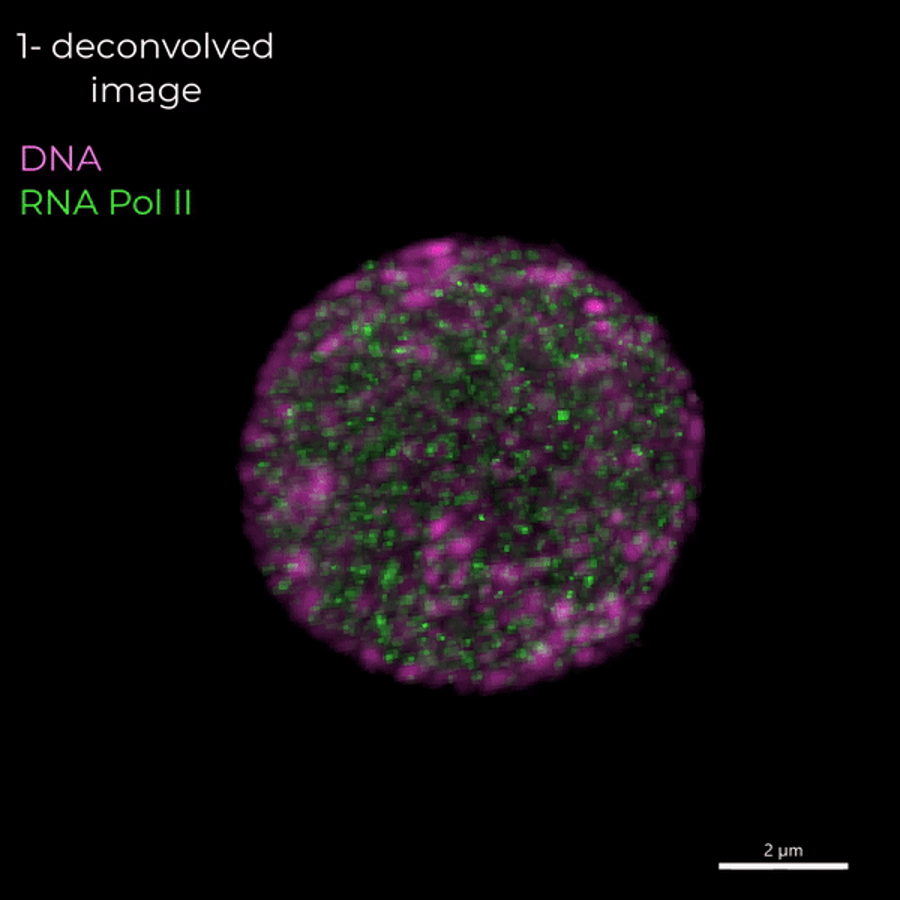
This course addresses the challenges of subcellular localization of fluorescent compounds in intact plant tissues and organs. Key issues include the high refractive index of fresh tissues, sample thickness, and stress-induced autofluorescence in dissected samples, alongside classical concerns such as photobleaching and phototoxicity. These factors complicate high-resolution and time-lapse imaging of fluorescent reporter proteins.
Participants will explore microscopy techniques tailored to specific applications, receive practical tips for optimizing imaging conditions, and engage in hands-on sessions with confocal laser scanning microscopy and multiphoton imaging. Emphasis will be placed on customizing acquisition parameters to achieve maximum resolution while balancing speed, viability, photobleaching, and signal diffraction in fresh versus fixed Arabidopsis tissues.
Additionally, the course will introduce image data management and analysis techniques, including 3D volume rendering, image segmentation, and quantitative information extraction for statistical analysis using tools like Fiji, Imaris, and Biom3D, an ML-based segmentation tool.
1 ECTS (30 learning hours)
Every three years (Spring semester)
Lecturer: Célia Baroux (UZH, Coordinator) and guest lecturer
Location: University of Zurich